In July 2026 at the World Artificial Intelligence Conference (WAIC), Professor Zeng Ming* introduced a powerful idea: Compounding Intelligence.
*Professor Zeng Ming is a globally recognized business strategist and former Chief Strategy Officer of Alibaba Group who served as Jack Ma’s primary architect in building the company into a global e-commerce empire.
The industrial era was built on economies of scale. The AI era, he argued, will be built on compounding intelligence. AI companies may benefit from something different: systems that improve as they complete more real-world tasks, receive more feedback, and learn faster.
The concept is compelling—but founders only care about one thing: who has actually proven it works?
Less than two months later, MiniMax* reported its H1 2026 results.
*For readers less familiar with MiniMax: founded in 2022, it is one of Asia’s prominent AI foundation-model companies and has quickly emerged as a global contender in multimodal AI.
The Numbers Tell a Bigger Story
MiniMax generated $116.6 million in revenue in the first half of 2026, up 283% year over year.
More interestingly, revenue from its Open Platform and other AI-based enterprise services rose from $9.2 million to $73.9 million in one year.
Roughly 8× growth.

Viewed through the depth of the customer relationship, its AI commercialization can be thought of in three layers:
- Direct-to-user: Products such as Hailuo AI put multimodal capabilities directly in front of consumers.
- Developer platform: APIs let developers build their own products on top of the model.
- Workflow embedding: The model becomes integrated into the customer’s product, process, and operating workflow.
The first two layers are becoming increasingly competitive. But the third layer is where the moat is built. When a model becomes an “organ” embedded within a customer’s business process, the cost of ripping it out becomes exponential.
The Time Gap: From Usage to Compounding Intelligence
More usage does not automatically create a moat.
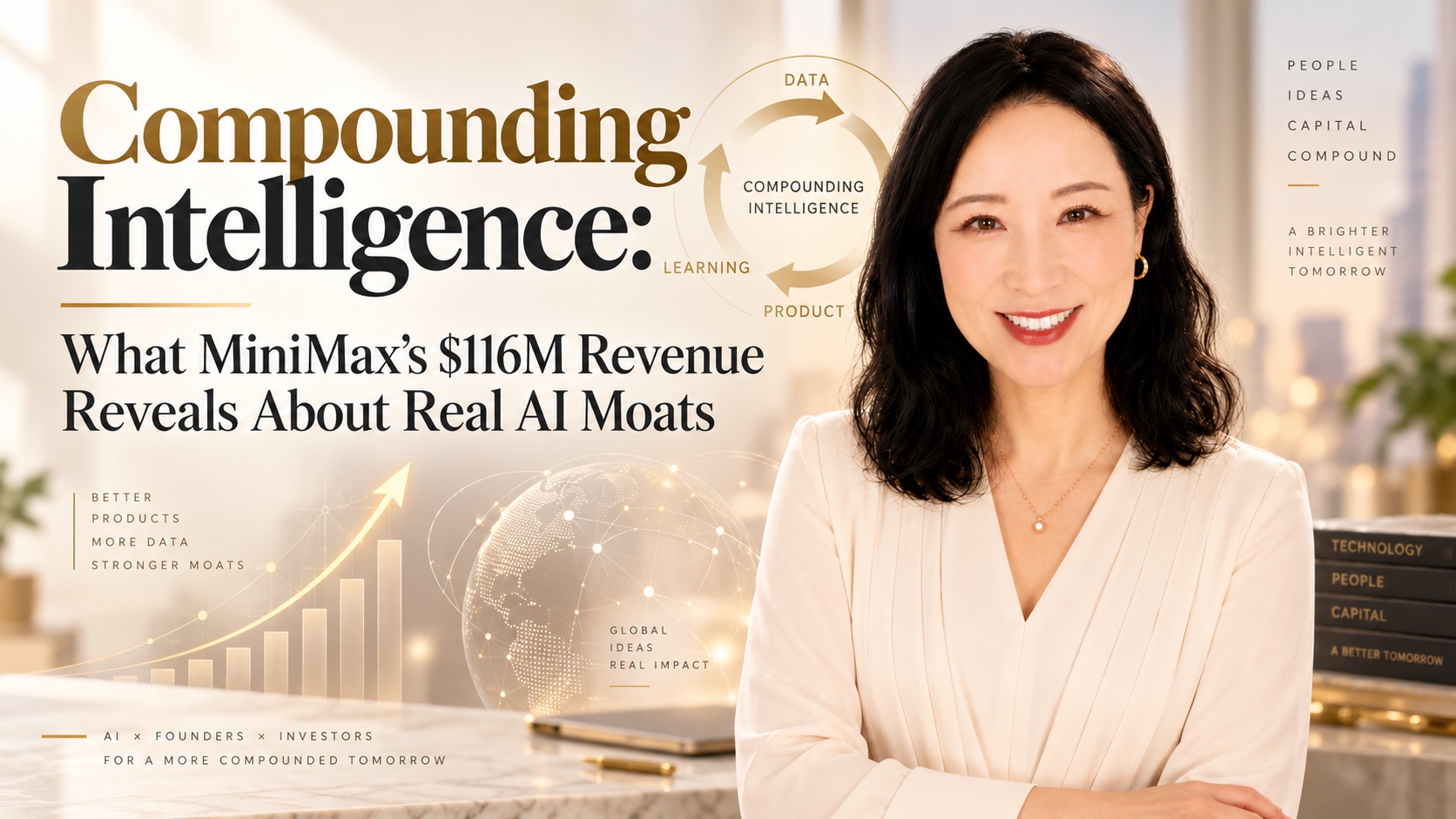
That is where MiniMax becomes interesting through the SMAF™ lens. A company must be able to turn usage into learning. It fuels the Compounding Intelligence loop:
More usage → denser real-world signals → better evaluation → refined models → deeper usage.
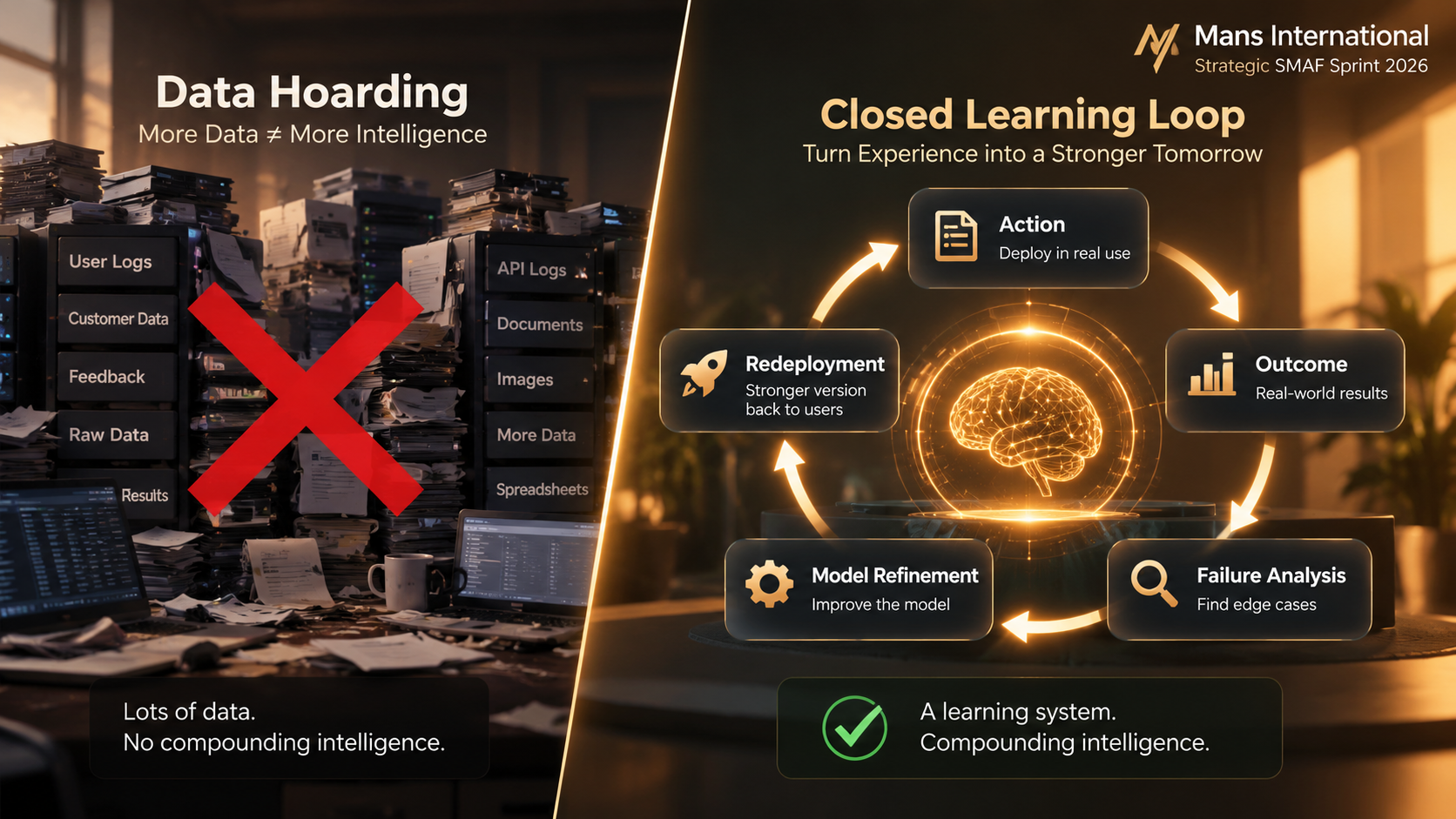
A well-funded competitor can raise a billion dollars, open-source a larger model, or poach your engineers. But it cannot instantly reproduce months or years of deployment experience, customer context, edge cases, and learning systems.
Architecture can be copied. Time cannot. That asymmetry is the true AI moat.
Three Questions Every Founder Should Ask
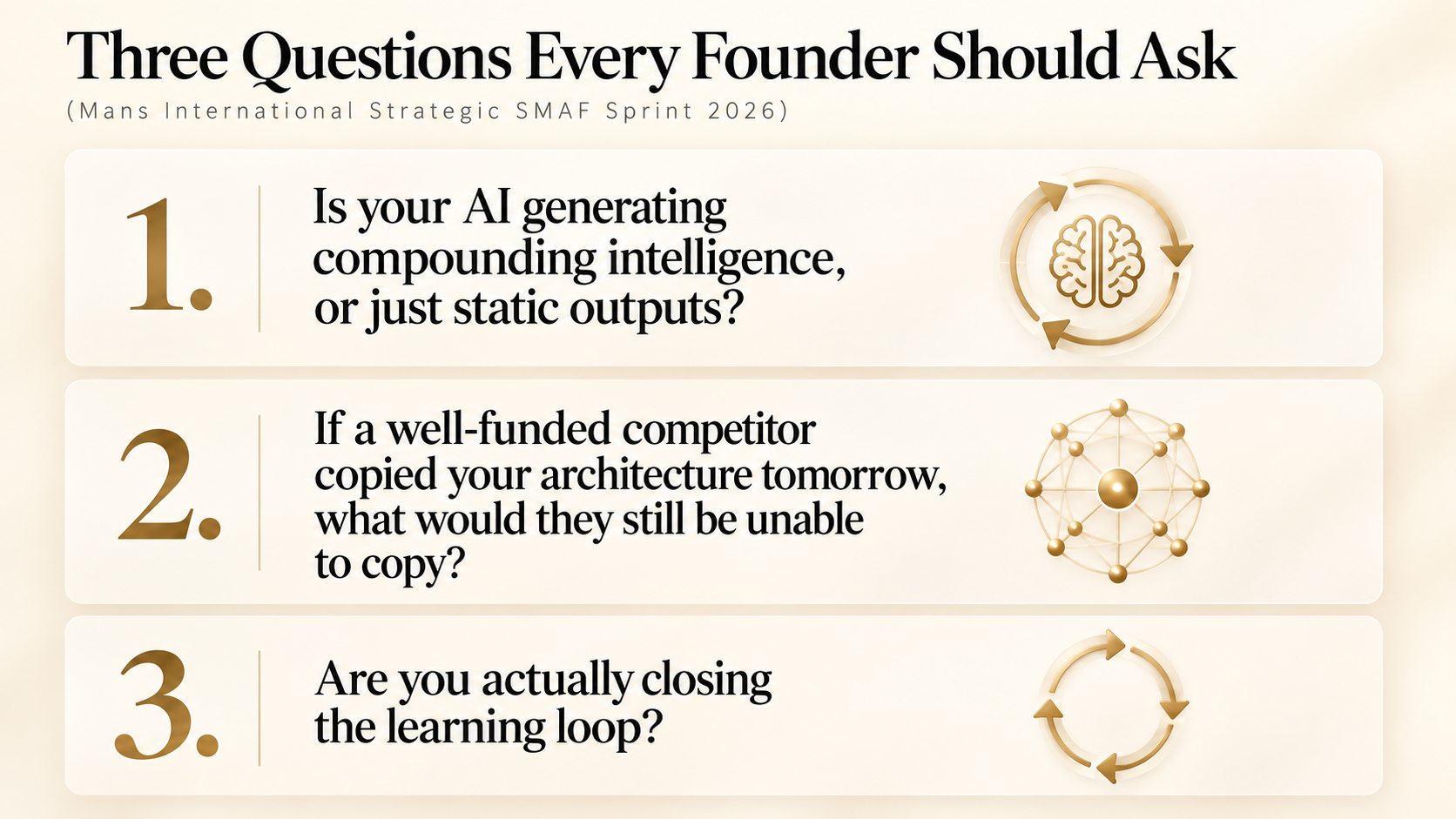
In our SMAF™ diagnostics, these three questions frequently expose uncomfortable blind spots:
- Is your AI generating compounding intelligence, or just static outputs?
- If a well-funded competitor copied your architecture tomorrow, what would they still be unable to copy?
- Are you actually closing the learning loop? Collecting data is not enough. Do you have a system that turns yesterday’s failed output into tomorrow’s product improvement?
Data becomes intelligence only when the loop closes.
A Closed-Door SMAF Seminar
If these questions expose gaps in your product roadmap, you are not alone.
On September 15, we are hosting a closed-door, invite-only seminar for tech founders, investors, and family offices to explore how AI companies can build competitive advantages that compound over time.
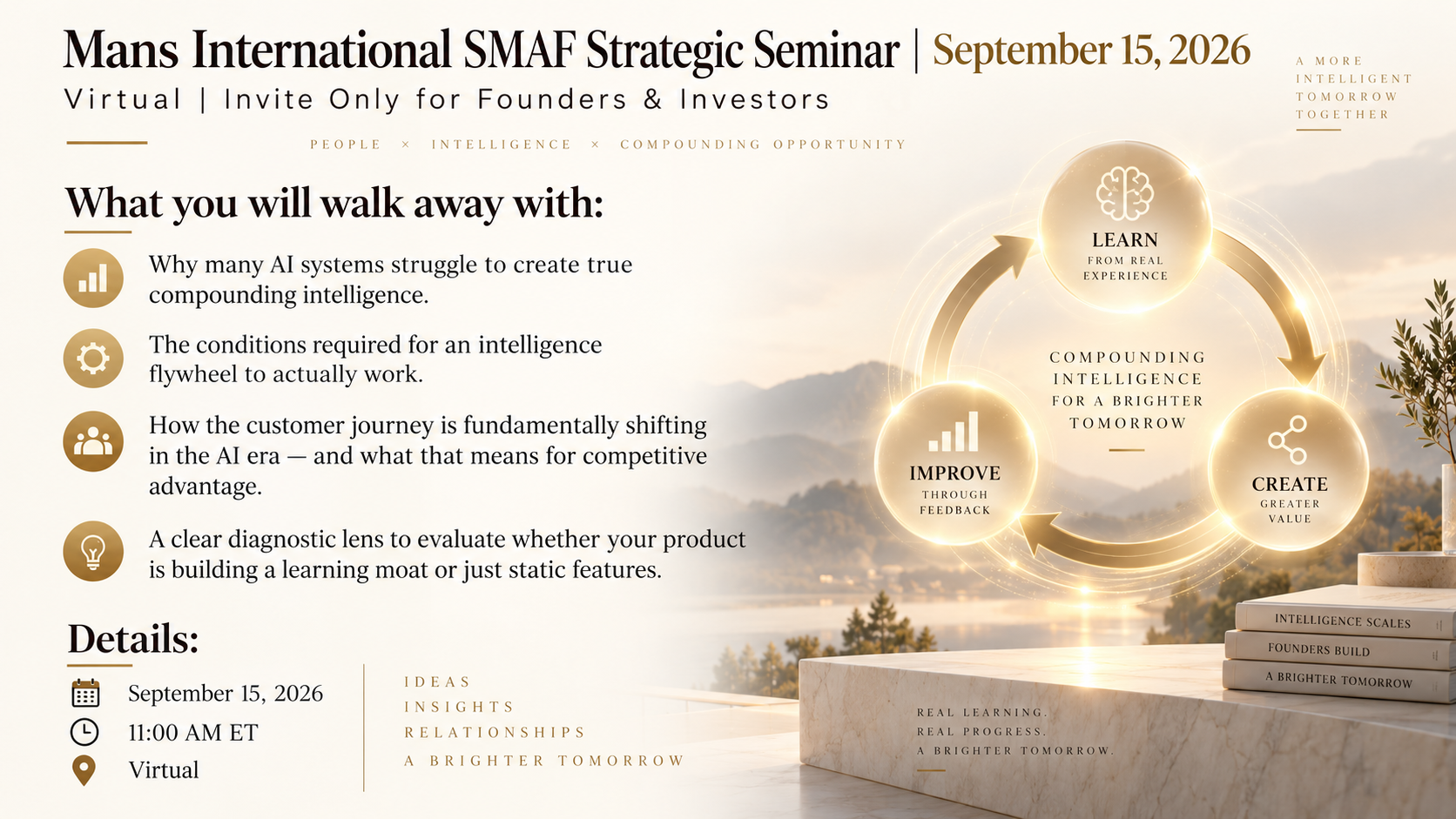
What you will walk away with:
- Why many AI systems struggle to create true compounding intelligence.
- The conditions required for an intelligence flywheel to actually work.
- How the customer journey is fundamentally shifting in the AI era — and what that means for competitive advantage.
- A clear diagnostic lens to evaluate whether your product is building a learning moat or just static features.
Details: 📅 September 15, 2026 🕐 11:00 AM ET 📍 Virtual
How to request an invitation: Send me a direct message with the word “SMAF” to request your seat. (Note: Current clients and partners have reserved seats—confirmation details will follow shortly).
Final Questions
Whether you attend the seminar or not, I will leave you with this:
If AI is the first conversation your customer has, what makes your company the one it ultimately chooses?
And once it chooses you:
Does your advantage compound—or depreciate?
(Note: The core concept of Compounding Intelligence referenced here was detailed in Professor Zeng Ming’s July 2026 book, “Intelligence.”)