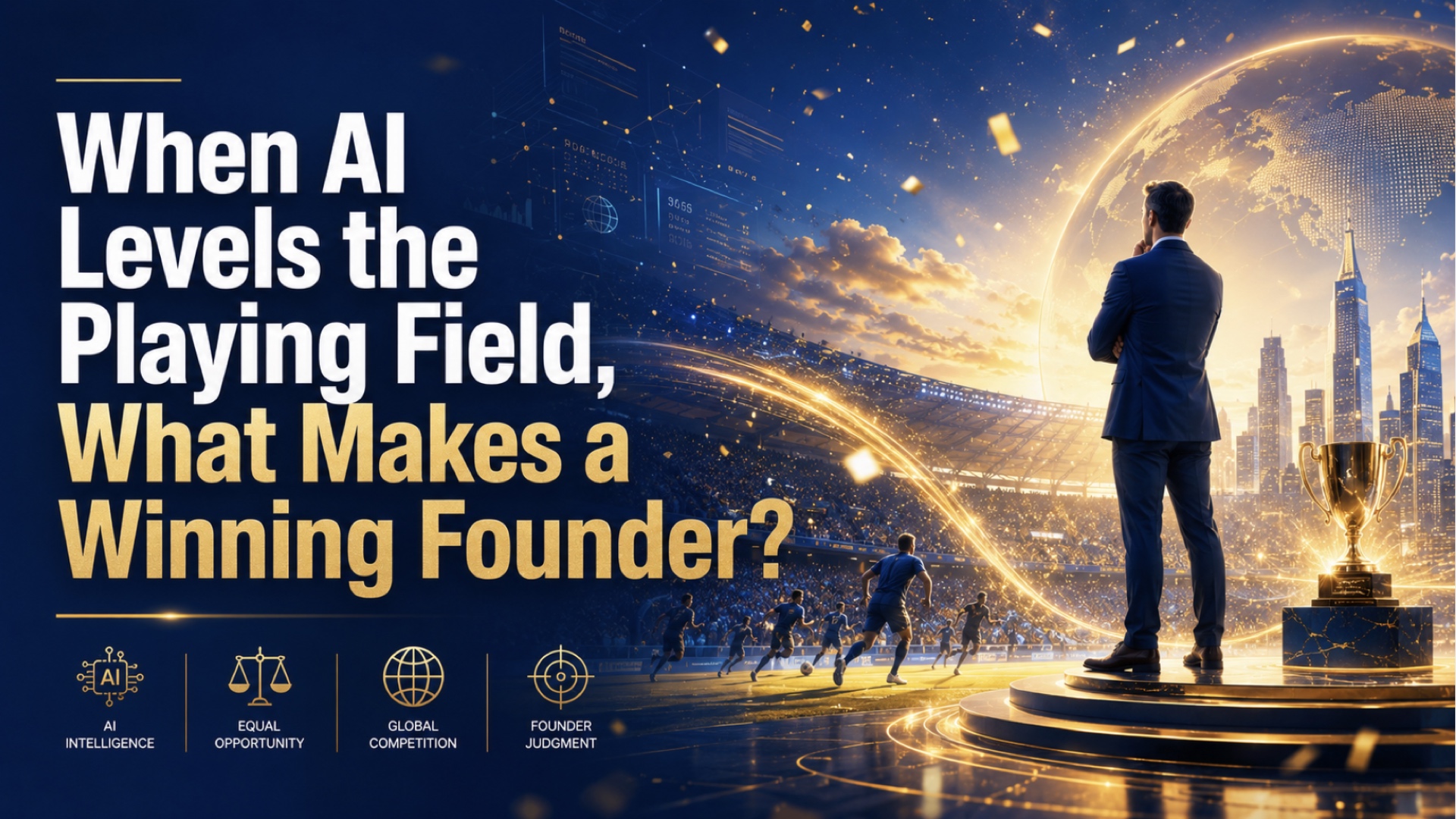
The 2026 World Cup final gave us a case study in a question that keeps every founder and investor up at night:
When AI hands everyone the same playbook, what’s left to compete on?
I. Data Can Be Equal. Judgment Cannot.

For the first time, all 48 participating teams received access to FIFA AI Pro, an AI platform developed by FIFA and Lenovo.
It gave every team a common analytical foundation for studying matches, players, and performance data.
But FIFA added one condition:
Once the whistle blew, no team could consult it. No sideline algorithms. No live probability feeds. The models went silent the moment the game started.
Sixty-two minutes into a scoreless final, Spain’s coach pulled his top scorer — solid numbers, nothing spectacular — and brought on Ferrán Torres, whose recent form was unremarkable but whose movement had an unpredictable, disruptive quality.
Torres found a gap in Argentina’s back line in the 106th minute. Goal. World Cup.
That call didn’t come from a model. It came from a coach’s profound perception of the game and the ingrained intuition of experience.
The Business Implication:
“Military tactics are like water… water shapes its course according to the nature of the ground; the soldier works out his victory in relation to the foe. Therefore, just as water retains no constant shape, in warfare there are no constant conditions.” — Sun Tzu
AI is rapidly becoming the world’s infrastructure. Any founder who wants a perfect competitive analysis can have it in seconds.
But business doesn’t happen in a pre-match calm. It happens during the game, when the ground shifts, signals conflict, and you have to decide.
For founders, the truth is blunt:
“Knowing how to use AI” is no longer a differentiator. What separates the winners is judgment in the face of ambiguity.
II. Monetizing the Unknown
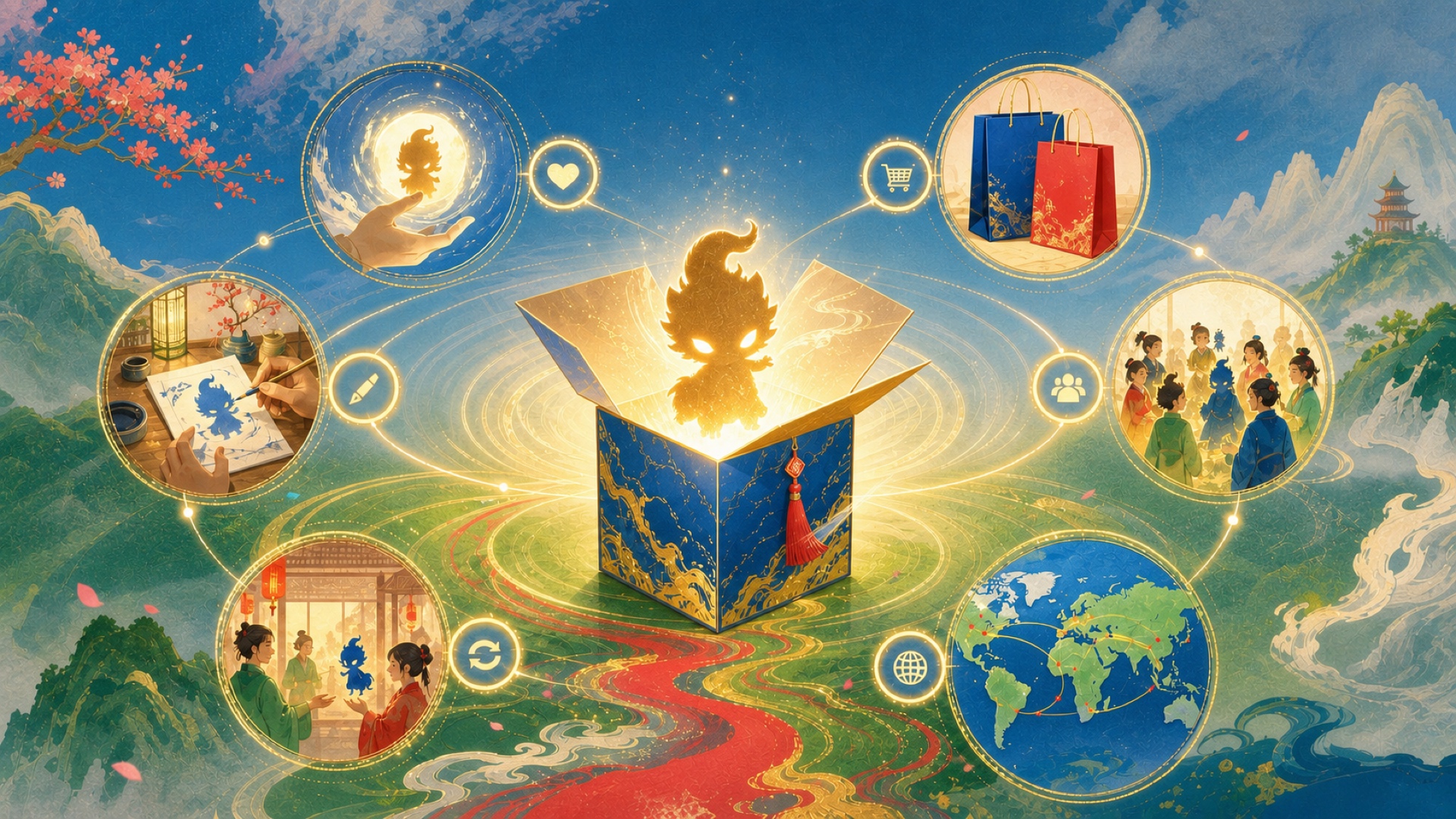
If the World Cup showed the value of judgment under uncertainty, Pop Mart has shown what happens when a company builds an entire business on uncertainty itself.
The Chinese toy company crossed HK$200 billion in market value on the strength of “blind box” retail — genuinely uncertain product bundles that turned unboxing into the product itself.
Their latest financials show overseas revenue exceeding 44%, with the Americas market growing over 700% year-over-year.
They are successfully exporting a methodology of “emotional pricing and scenario construction” to the rest of the world.
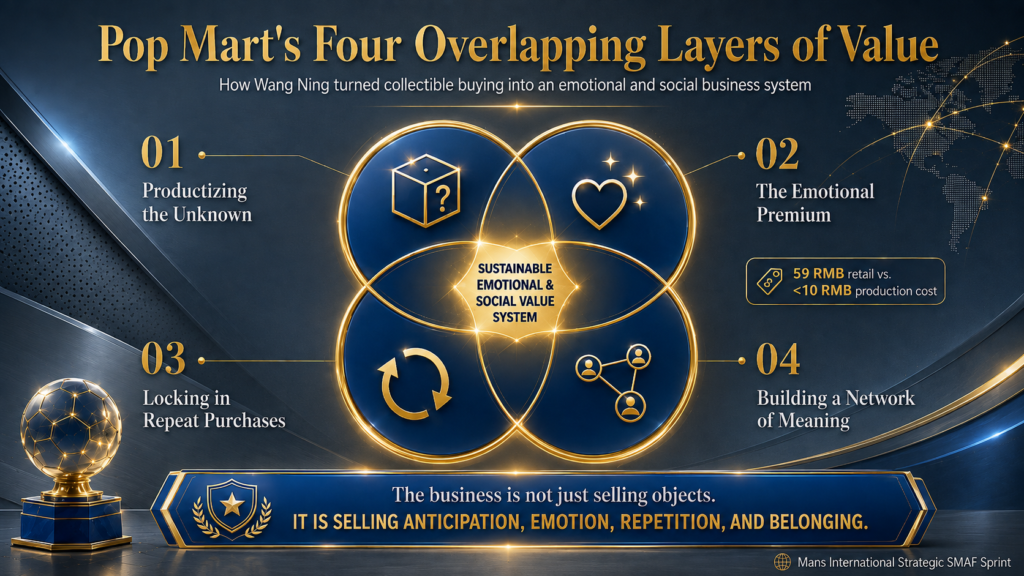
The surface story is “blind boxes” and lottery-style addiction. But Pop Mart’s founder, Wang Ning, has engineered four overlapping layers of value:
- Productizing the Unknown: buyers pay for the emotional peak of not knowing what’s inside, not for the object itself.
- The Emotional Premium: a Molly doll retails for roughly 59 RMB against a production cost under 10 RMB. That 49 RMB premium is psychological compensation for the total experience, not merely the materials.
- Locking in Repeat Purchases: the tension between “not finding it” and “finally getting it” turns single purchases into a habit loop.
- Building a Network of Meaning: exhibitions, designer signings, hidden-tier communities, a thriving resale market. Pop Mart isn’t just selling toys anymore — it’s selling belonging.
The Business Implication:
Stop pricing purely for function — learn to price for emotion. Stop staring only at the transaction — learn to construct a “network of meaning” where users voluntarily choose to linger.
III. The Real Differentiator

The coach’s substitution and Pop Mart’s emotional engineering are, underneath, the same capability: a deep read of context that no model hands you.
At Mans International, we assess this through our Scenario Maturity Assessment Framework (SMAF), built around three questions.
- Can you make a correct, counter-consensus call before the data is complete?
- Does your product sell utility, or does it sell a meaning people will pay a premium for?
- And is your growth a string of one-off transactions, or a system that reinforces itself?
Most businesses are trapped in the comfort zone of commoditized, standardized earnings. Very few have turned uncertainty itself into their competitive advantage.
Concluding Thoughts

The cruelest truth of the AI era is that everything standard, quantifiable, and definitive will become infinitely cheap—as ubiquitous and inexpensive as tap water.
The messy, dynamic, uncertain reality is the actual battlefield.
Average managers freeze in front of it. Exceptional founders learn to work with it — and the best ones build it into the business model itself.
When AI neutralizes technical horsepower, your read of what’s really happening in the human, emotional terrain of your market becomes the one card no one can copy.
Which of these three questions is your team still avoiding?