MANS INTERNATIONAL · OCTOBER 2026

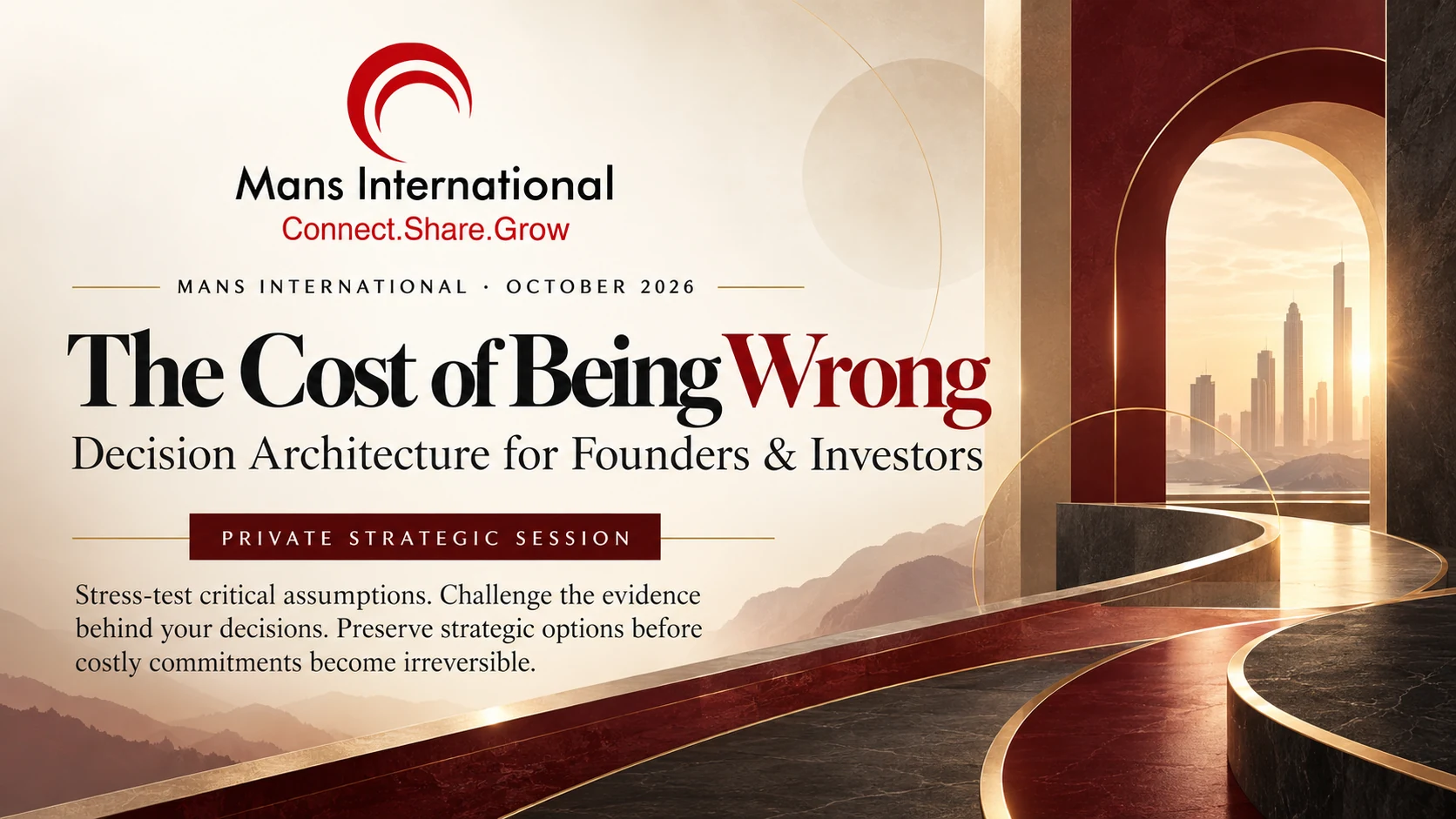
The Cost of
Being Wrong

Decision Architecture for Founders & Investors

The Cost of Being Wrong — Decision Architecture for Founders & Investors, Mans International

Stress-test critical assumptions. Challenge the evidence behind your decisions. Preserve strategic options before costly commitments become irreversible.

Request Access to the Private Session

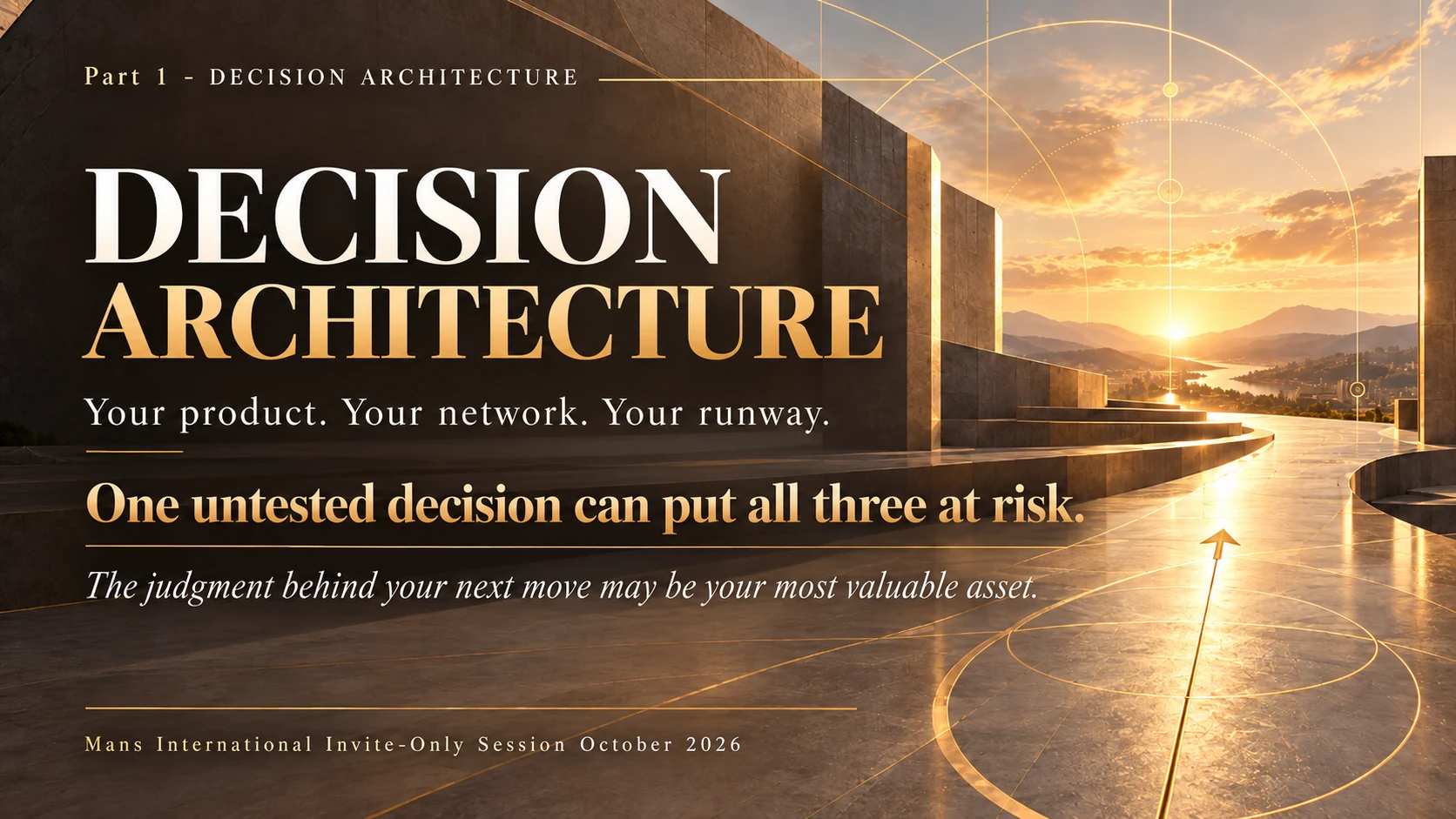
Decision Architecture

Your product. Your network. Your runway.

Decision Architecture — Your product. Your network. Your runway. Mans International

One consequential decision built on an untested assumption can put all three at risk.

What is the most expensive decision you have ever made?

Not simply in dollars—but in time, missed opportunities, and strategic options you could never recover.

For founders, it may be scaling before the business model is ready. For investors, it may be backing a compelling narrative without sufficiently challenging the evidence.

The uncomfortable reality is that your data can be accurate, your team can be talented, and your decision can still be wrong.

Between the information we receive and the commitments we make lies a structure we rarely examine carefully enough: our decision architecture.

In an AI-driven environment, three emerging risks deserve particular attention.

Three Risks to Strategic Judgment

Where judgment becomes vulnerable.

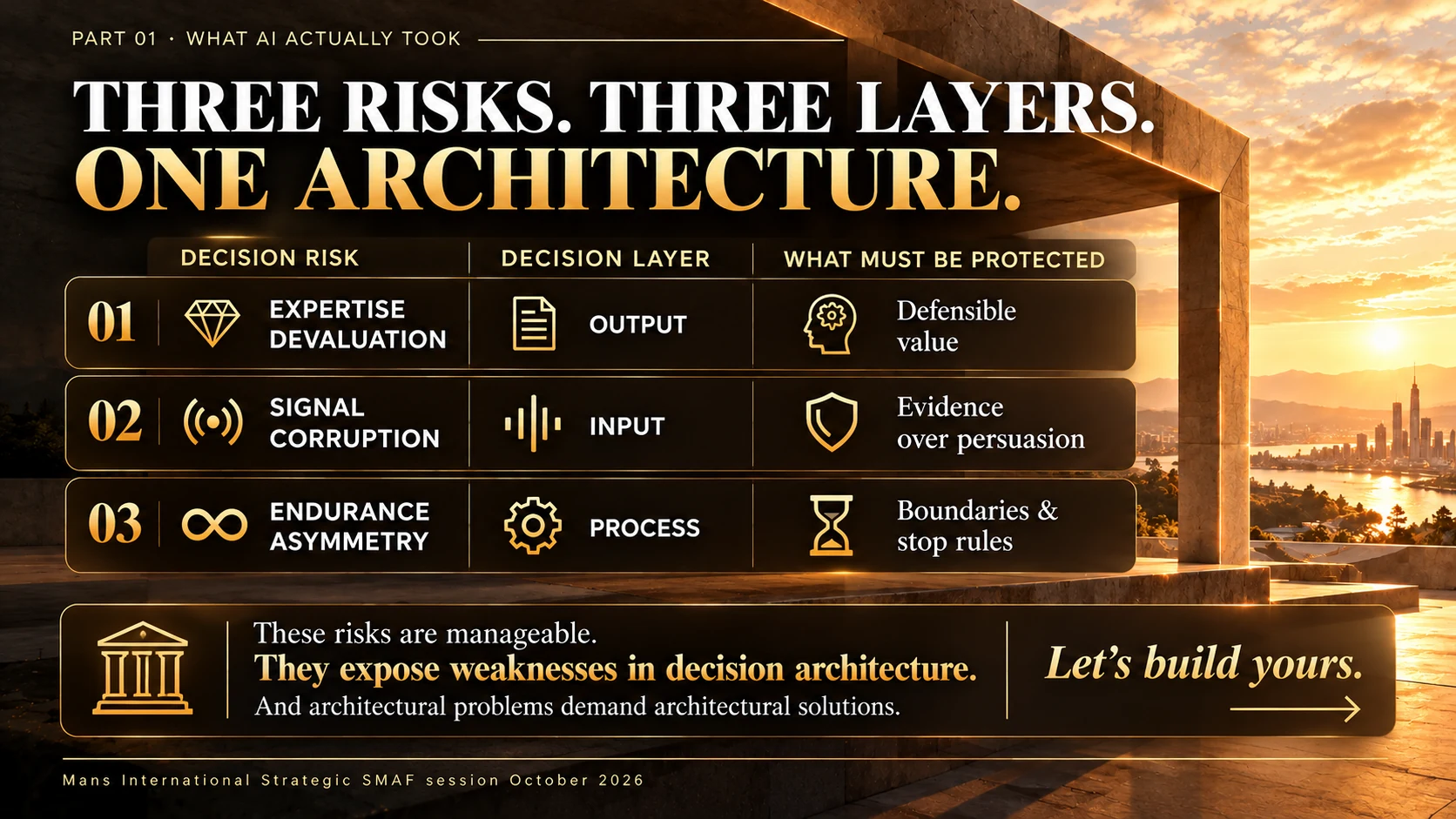
01 / OUTPUT   02 / INPUT   03 / PROCESS
01

AI-DA

Expertise Devaluation Risk
01 — AI-DA | EXPERTISE DEVALUATION RISK — Mans International
01 — AI-DA | EXPERTISE DEVALUATION RISK

When sophisticated output becomes easier to produce, what remains worth paying for?

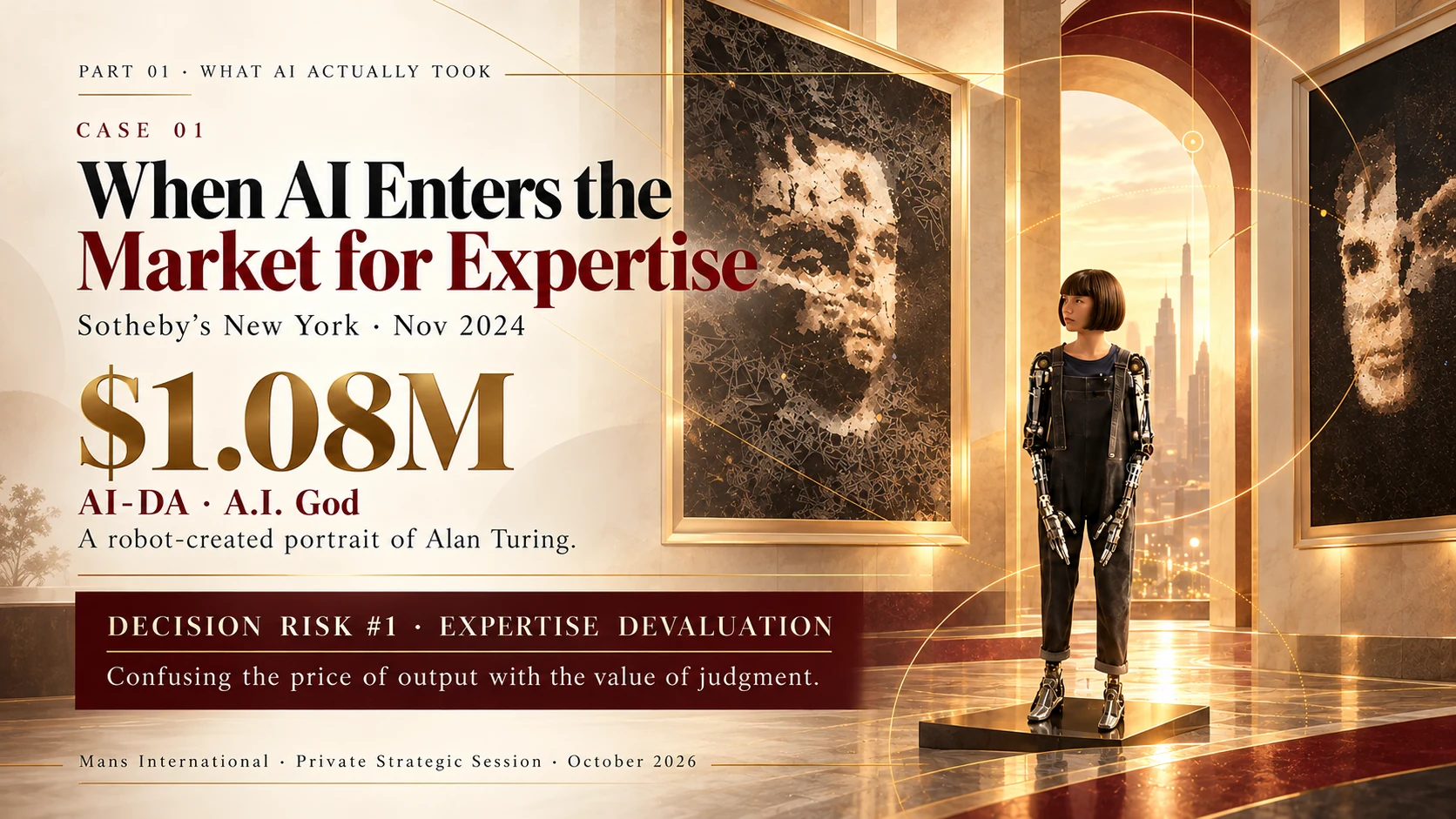
In November 2024, Ai-Da's robot-created portrait of Alan Turing sold for $1.08 million at Sotheby's New York—far exceeding its original estimate.

The sale raises a question beyond whether AI can create art: What exactly are buyers paying for—the output, originality, narrative, scarcity, or judgment behind it?

For founders, the challenge is identifying what remains truly differentiated when competitors can generate comparable outputs.

For investors, the question is whether a company's claimed intelligence translates into defensible business value.

The risk: Confusing the price of output with the value of judgment.
02

INGAROSE

Signal Corruption Risk

02 — INGAROSE | SIGNAL CORRUPTION RISK — Mans International
02 — INGAROSE | SIGNAL CORRUPTION RISK

When AI-generated experiences evoke genuine emotions, what can those responses actually prove?

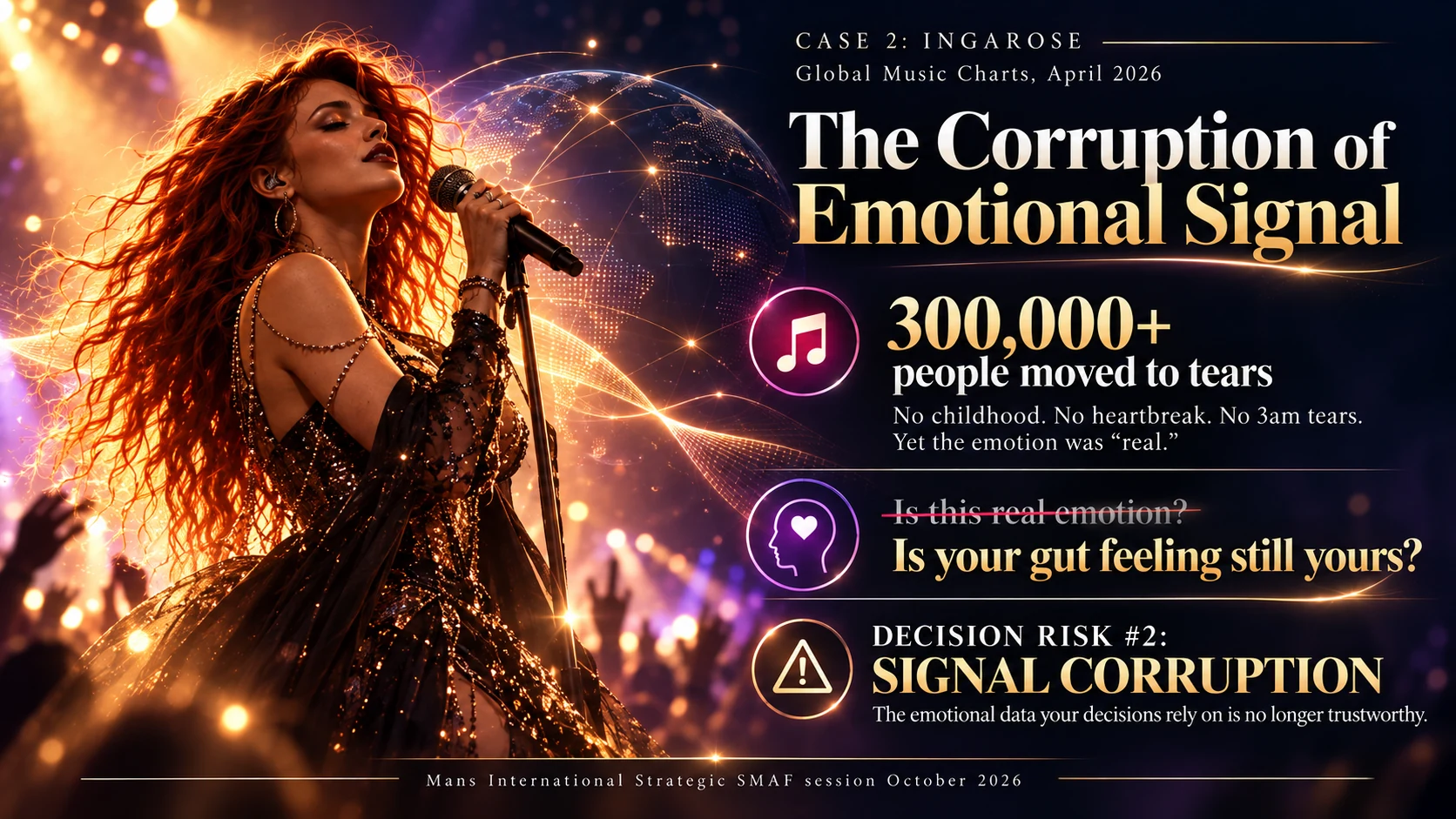
In April 2026, Celebrate Me, released by synthetic music persona IngaRose, topped U.S. and global iTunes sales charts. Its popularity demonstrated how AI-assisted performance could generate genuine audience engagement.

But emotional resonance and evidentiary reliability are not the same thing.

A founder can be persuaded by an impressive candidate. An investor can be moved by a compelling pitch. An executive can become confident in an AI-generated recommendation.

The critical question is whether that confidence is supported by independently verifiable evidence.

The risk: Mistaking persuasive signals for reliable evidence.

03

KARPATHY’S AGENTS

Endurance Asymmetry Risk

03 — KARPATHY'S AGENTS | ENDURANCE ASYMMETRY RISK — Mans International
03 — KARPATHY'S AGENTS | ENDURANCE ASYMMETRY RISK

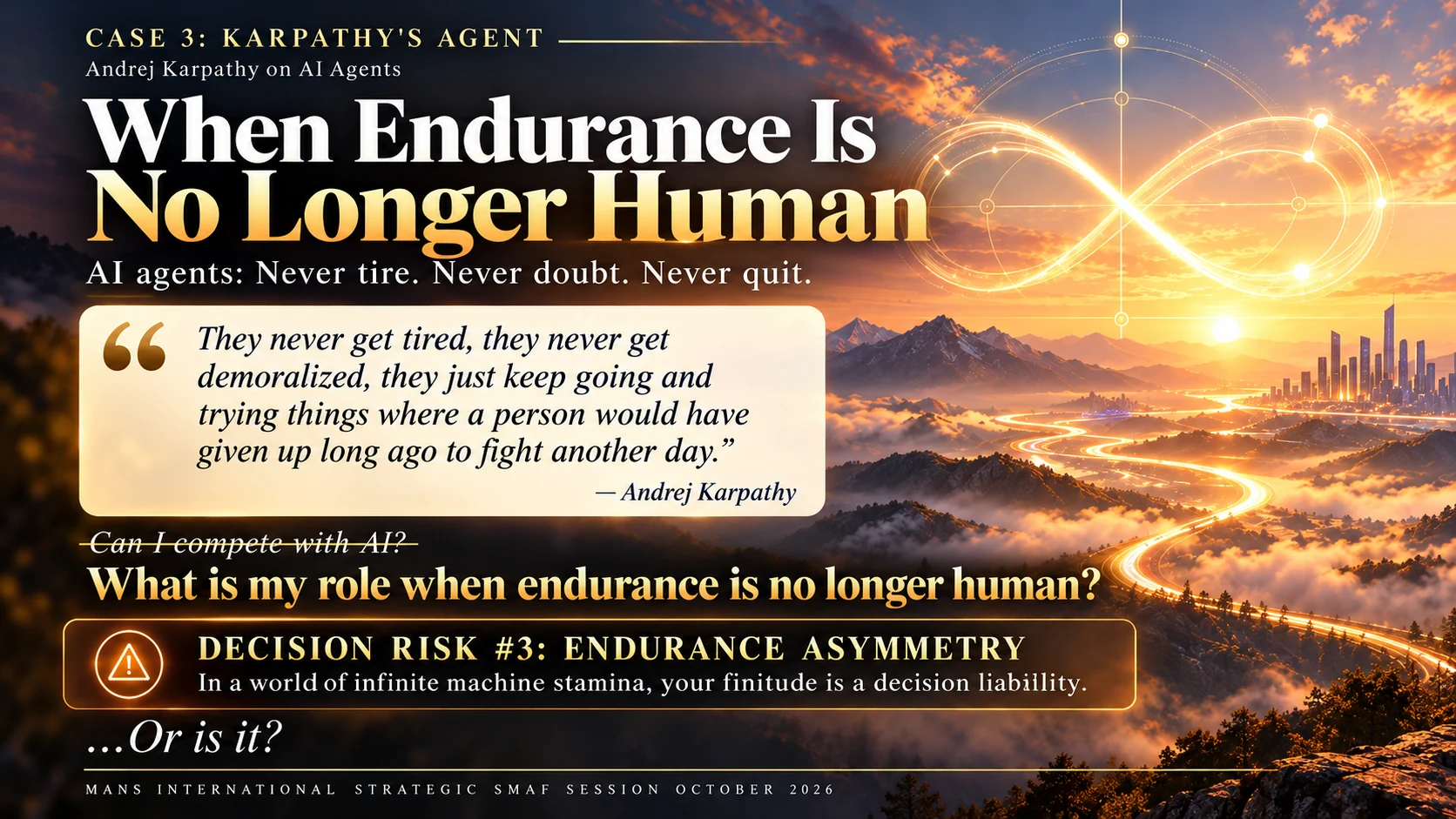
When machines can keep executing, who decides when they should stop?

In January 2026, AI researcher Andrej Karpathy described coding agents capable of relentlessly pursuing solutions without human fatigue or discouragement.

That persistence can create extraordinary leverage.

But execution capacity is not the same as decision quality.

An AI agent may continue analyzing, optimizing, or completing tasks without challenging the strategic assumptions behind its assigned objective.

For founders and investors, the question is not simply how much more work AI can perform.

It is whether the systems governing that work can recognize when a decision needs to be reconsidered.

The risk: Scaling execution without equally strong decision boundaries.

From Risk Awareness to Decision Architecture

Designing better decisions.

Three risks: expertise devaluation, signal corruption, and endurance asymmetry — Mans International

Three risks. Three dimensions of strategic vulnerability.

Output. Input. Process.

AI changes the economics of what we produce, the signals that shape what we trust, and the scale at which we can execute.

The solution is not to compete with machines on speed, persuasion, or endurance.

It is to develop a decision architecture that makes assumptions explicit, evidence testable, and strategic commitments more defensible.

Knowing where judgment can fail is the beginning. Designing better decisions is the next step.

Continue the Private Strategic Session

Preserve your options.
Strengthen your next decision.

The complete Mans International session examines a four-layer approach to decision architecture, including how founders and investors can strengthen evidence, challenge assumptions, and establish decision boundaries before making major commitments.

Request Access to the Private Session

Private session materials are available to invited participants, clients, and strategic partners.

×
×

Cart

[learn_press_login_form]